
WEEE REUSE pilot action fosters inclusive circular economy solutions
As announced, the end of March 2026 marks the official completion of the EWASTER pilot testing phase. We are proud to highlight the successful implementation of the WEEE REUSE pilot action, a transnational initiative focused on advancing circular economy practices through the reuse of plastic and e-waste, while promoting social inclusion and job creation.
Implemented through the collaboration of project partners — the Coordination Office together with PACT (Portugal), ORZ (Slovenia), and LINK (Mostar) — the pilot focused on developing and testing innovative business models that integrate environmental sustainability with social impact.
Key Achievements of the WEEE REUSE Pilot:
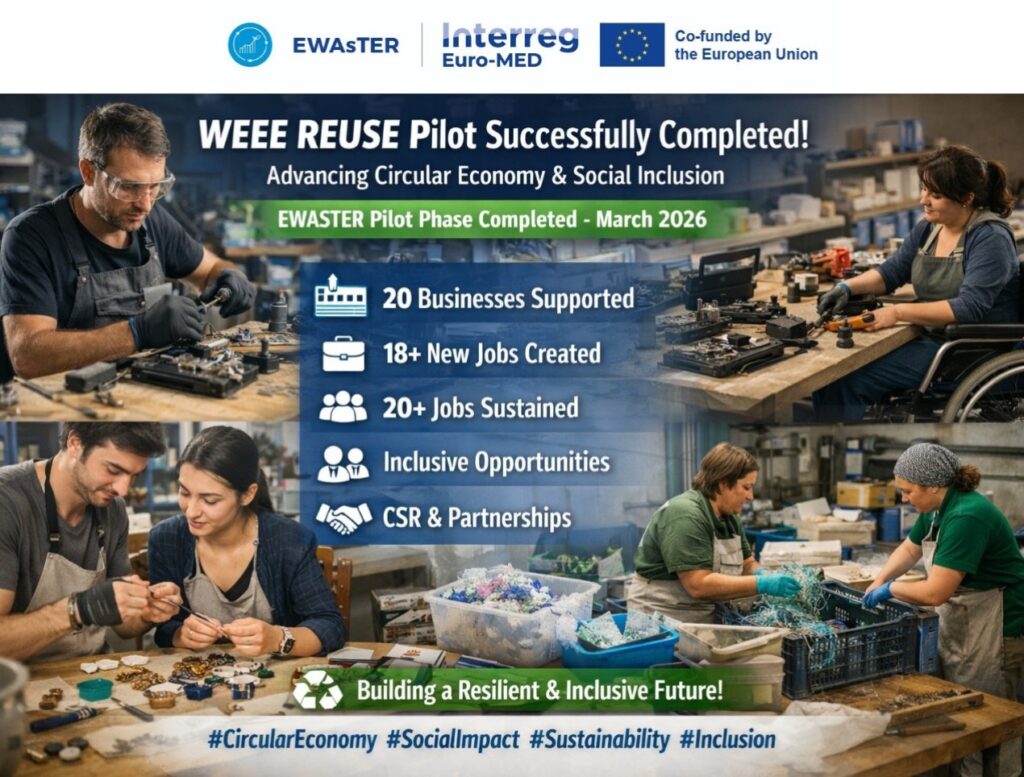
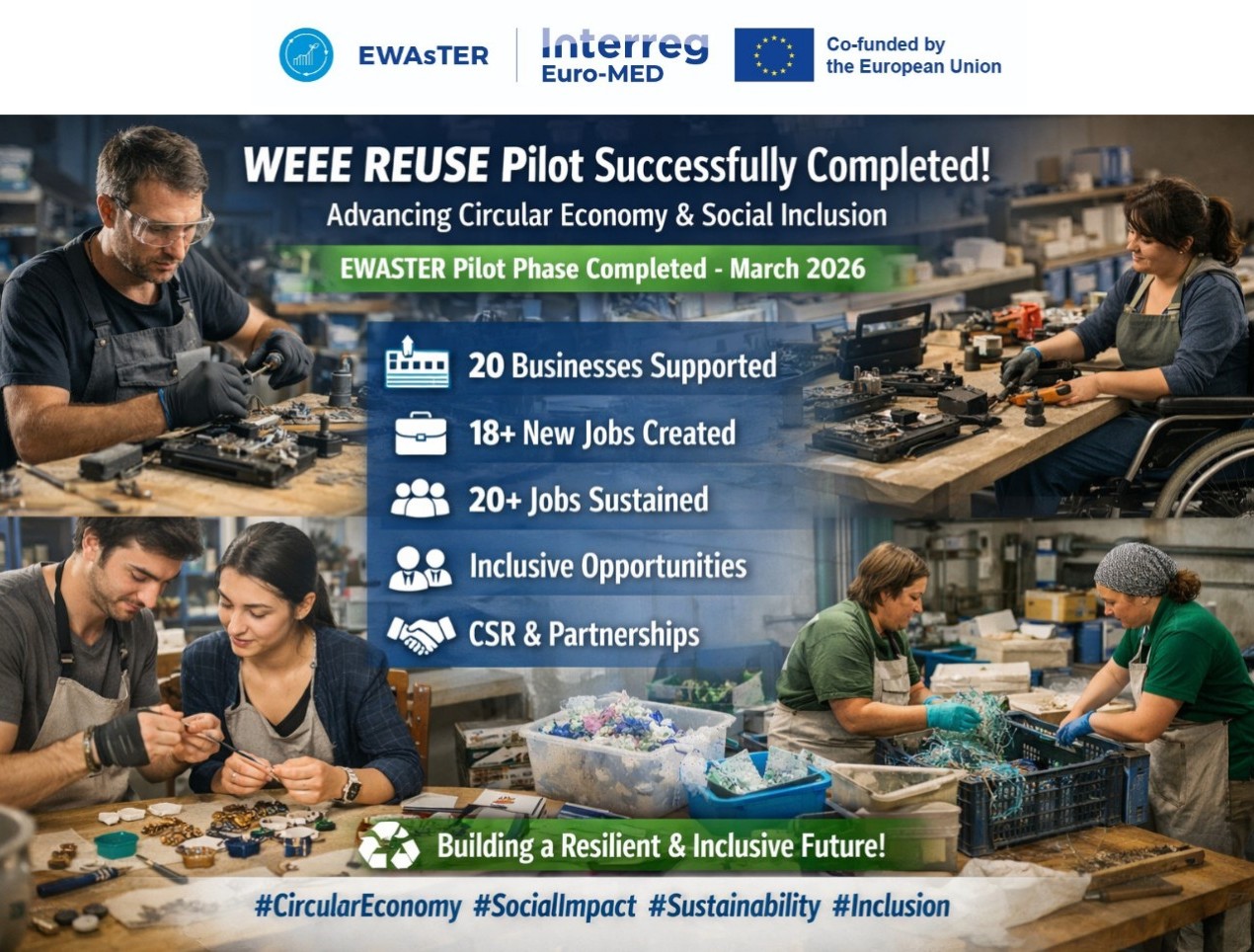
- 20 businesses supported across diverse sectors and legal forms — including social enterprises, NGOs, SMEs, and crafts — in adopting reuse-oriented business models
- 18 new jobs created, with 20+ existing jobs sustained, opening opportunities for vulnerable individuals, including persons with disabilities and other marginalized groups
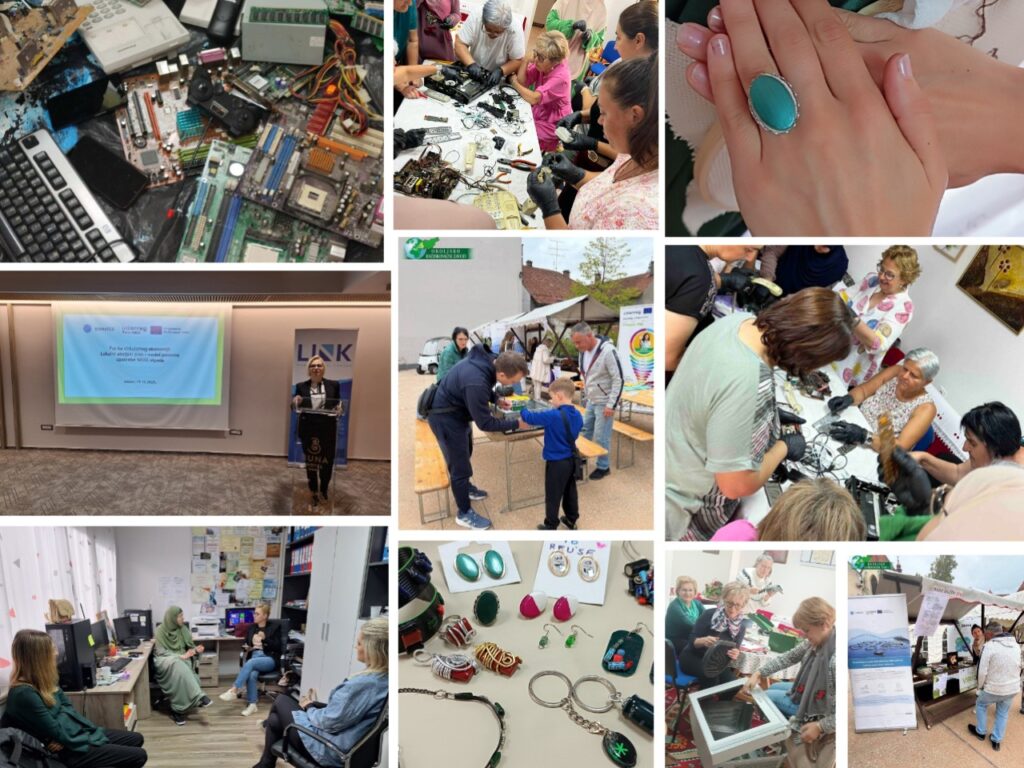
- Strong stakeholder engagement, bringing together social enterprises, NGOs, public institutions, and citizens to promote reuse practices
- Enhanced collaboration between private sector actors and social economy stakeholders
- Promotion of Corporate Social Responsibility (CSR) measures to support inclusive employment
Bridging Environmental and Social Innovation
WEEE REUSE stands as a socially driven, market-oriented pilot, addressing both environmental challenges and social inclusion gaps. By working directly with companies and supporting the integration of reuse practices into their operations, the initiative has demonstrated the strong potential of circular economy approaches to generate tangible socio-economic benefits.
Pilot Objectives:
- Support the development of new business models based on the reuse of plastic and e-waste
- Encourage private sector engagement in circular economy solutions
- Promote employment opportunities for vulnerable individuals through social entrepreneurship and CSR measures
- Strengthen multi-stakeholder cooperation between businesses, social enterprises, NGOs, and public institutions
The WEEE REUSE pilot clearly demonstrates that sustainable waste management can go hand in hand with social innovation. By linking reuse practices with inclusive employment strategies, the initiative contributes to building more resilient, equitable, and circular local economies.
The pilot was implemented across SMEs, NGOs, and social enterprises operating in diverse sectors (beside e-waste), including agriculture, jewellery production, souvenir production, retail, and service provision. This diversity enabled comprehensive insights and comparative analysis of results across different industries and operational models. Sector of creative industries and production (such as souvenirs, handicrafts and jewellery proved to have the most potential for WEE REUSE appliance).
Ensuring Long-Term Impact and Transferability
WEEE REUSE has established a solid foundation for scaling up inclusive circular economy models. The pilot’s approach—based on company assessments, stakeholder engagement, and the integration of CSR measures—offers a practical and adaptable framework for replication in other regions.
Through peer review processes and transnational knowledge exchange, the project has generated valuable insights into how to effectively promote job creation for vulnerable groups within the e-waste and reuse sectors. These results provide a strong basis for further policy development and the wider adoption of socially responsible business practices across Europe.