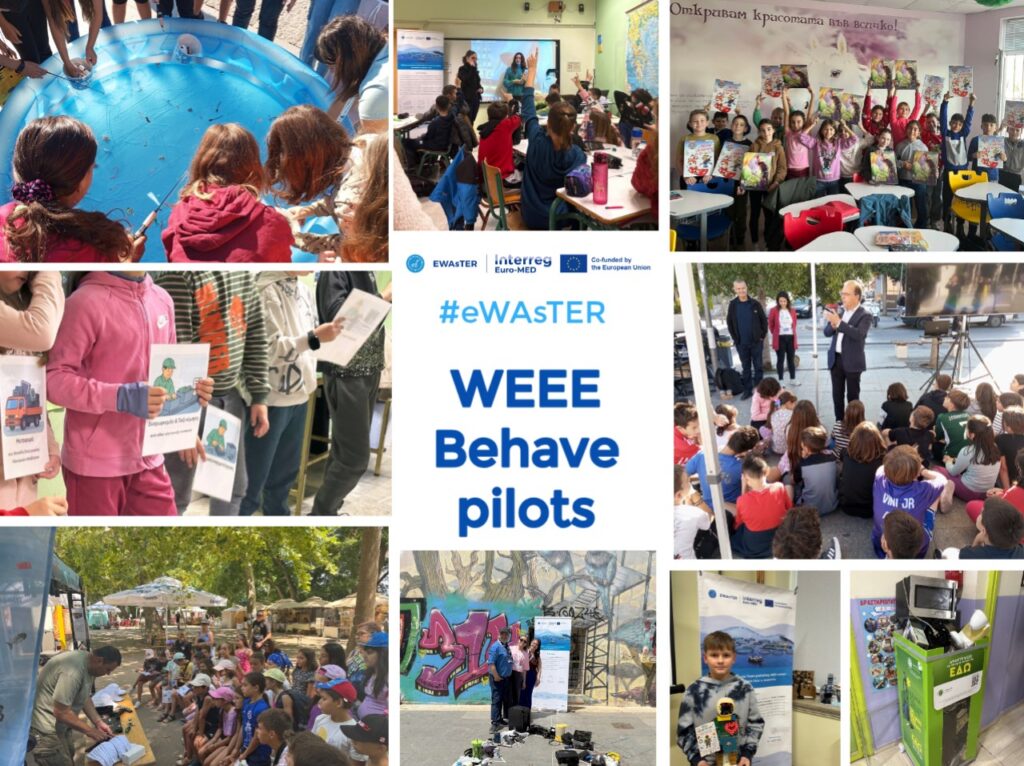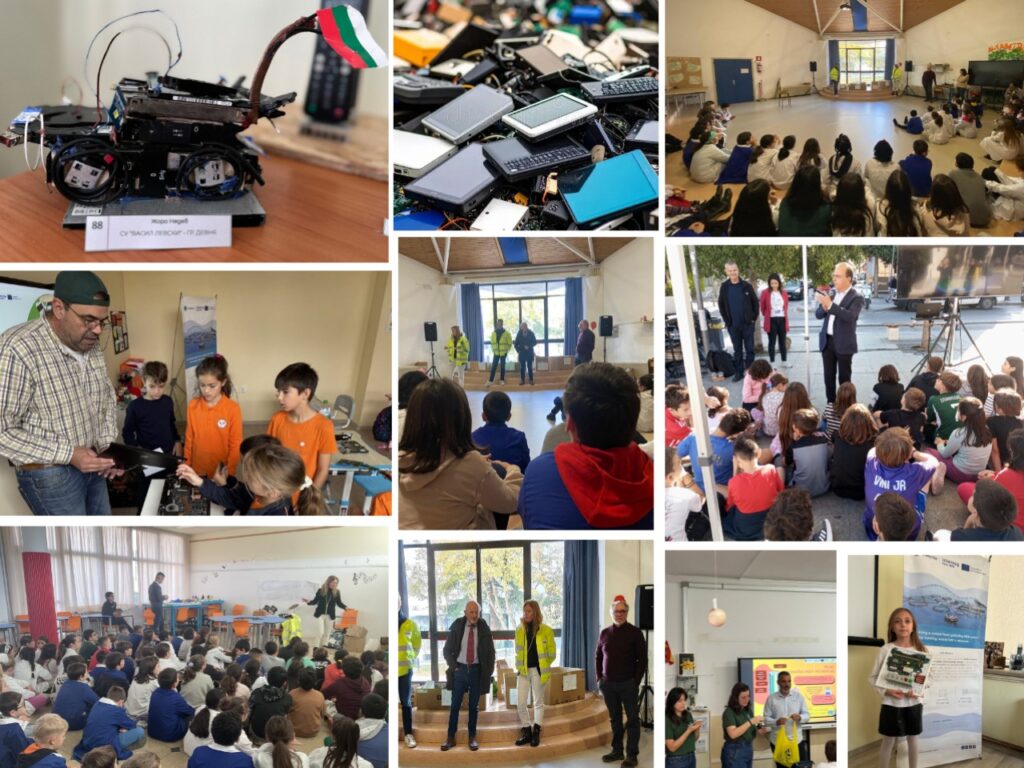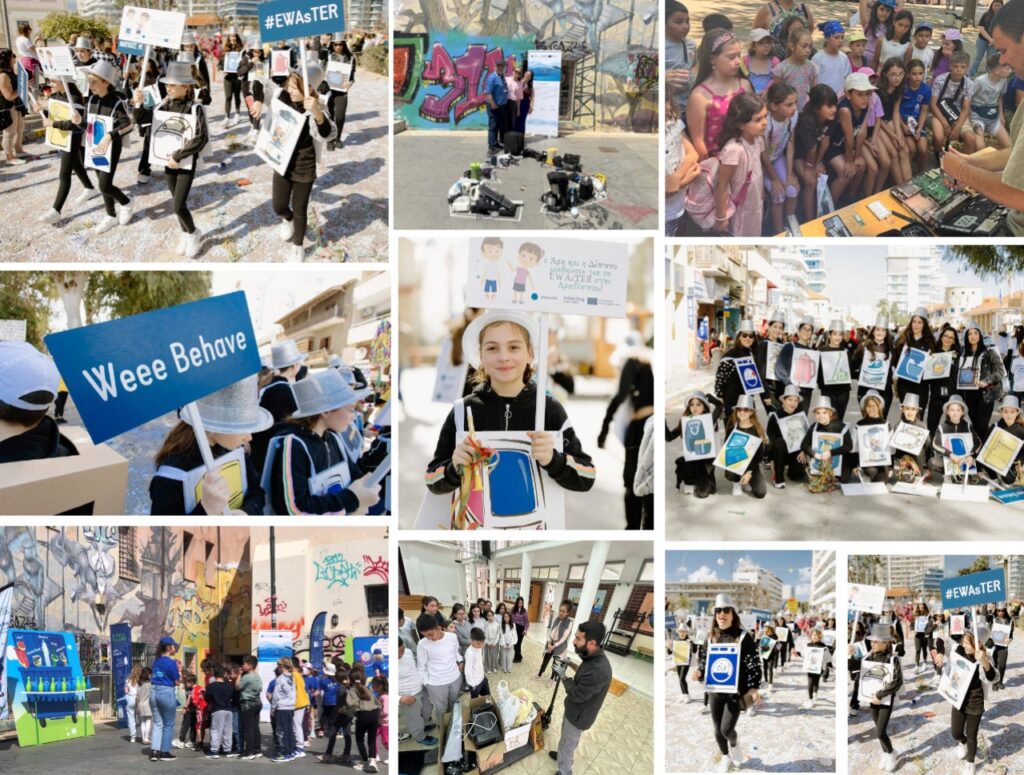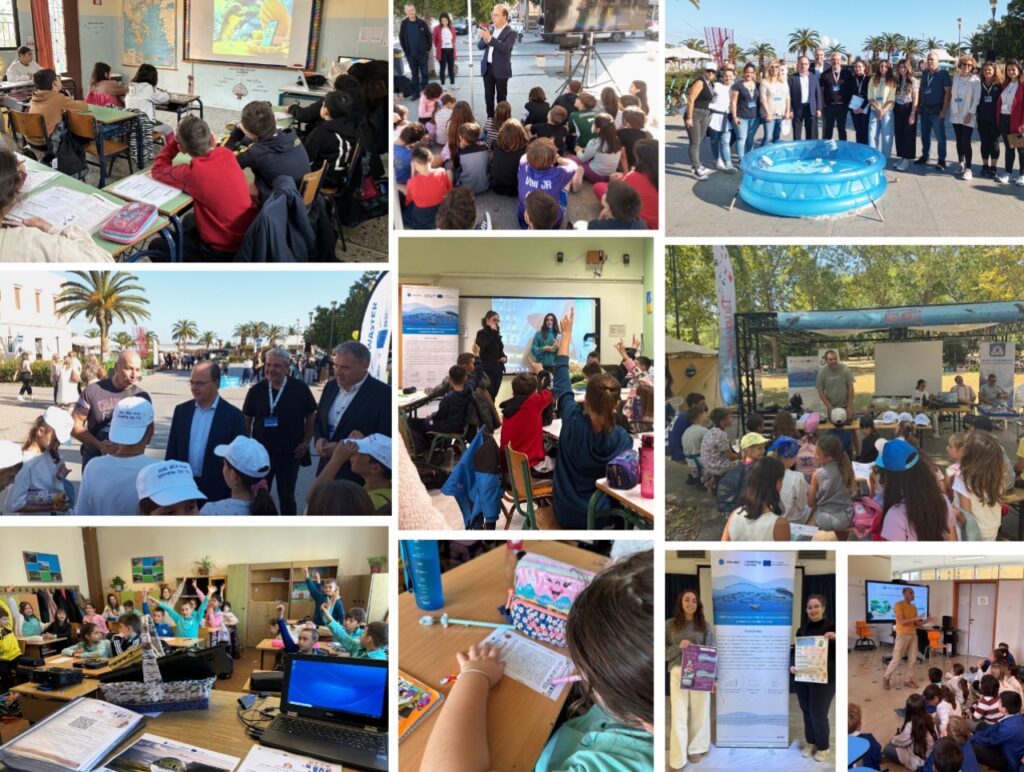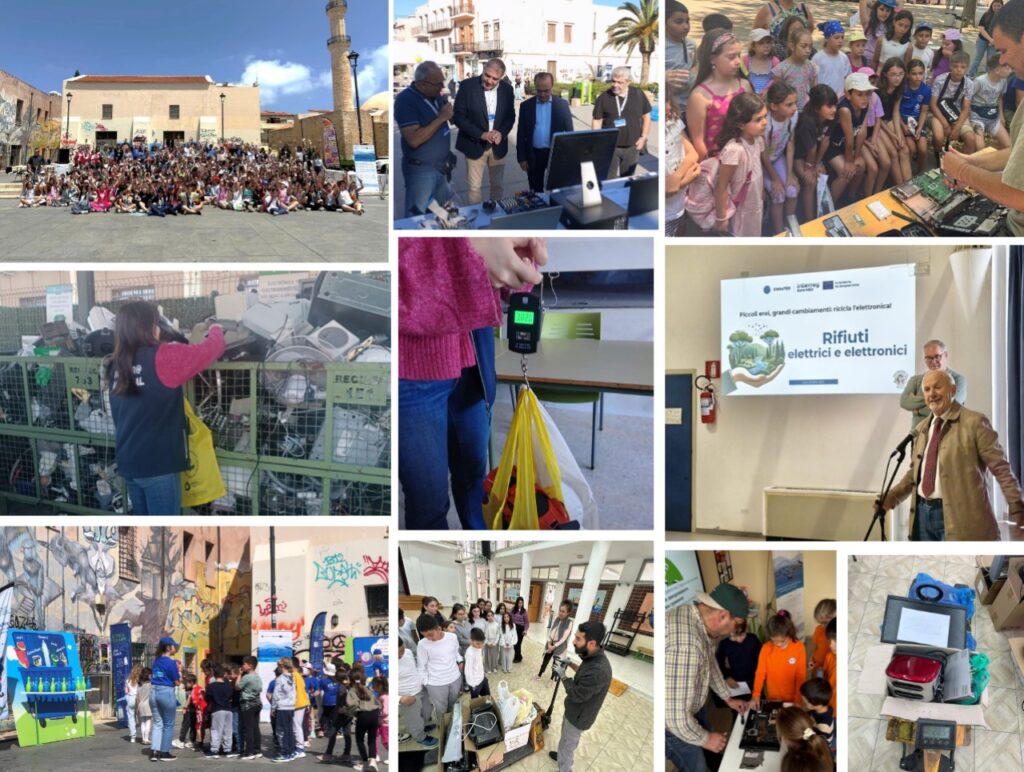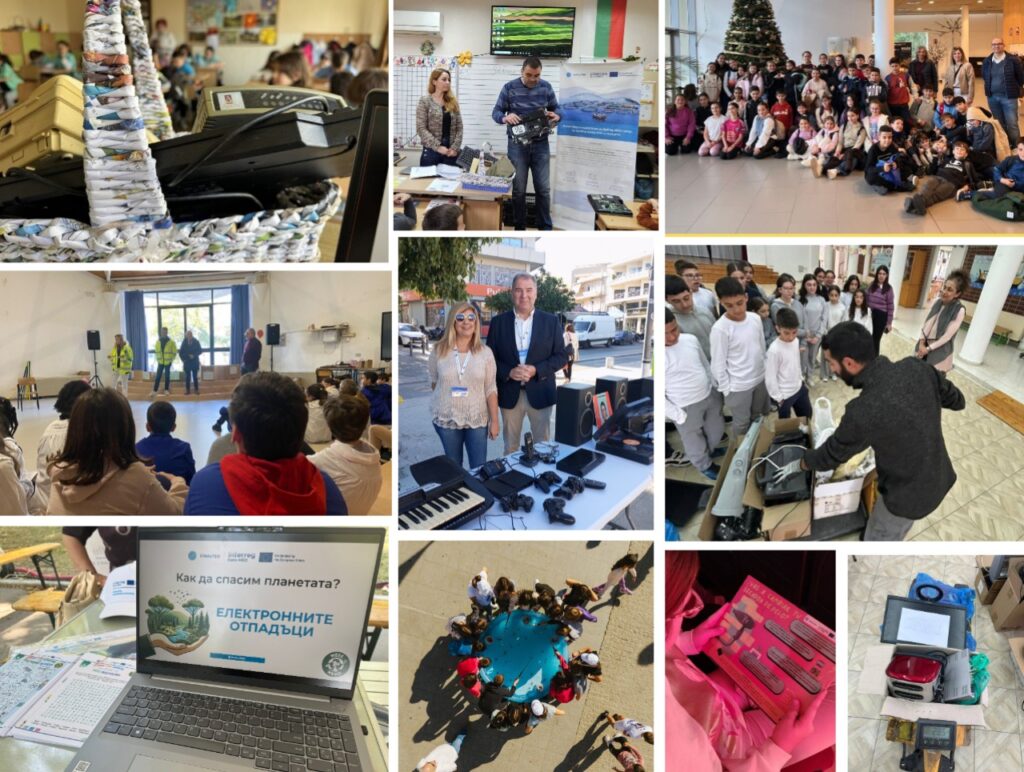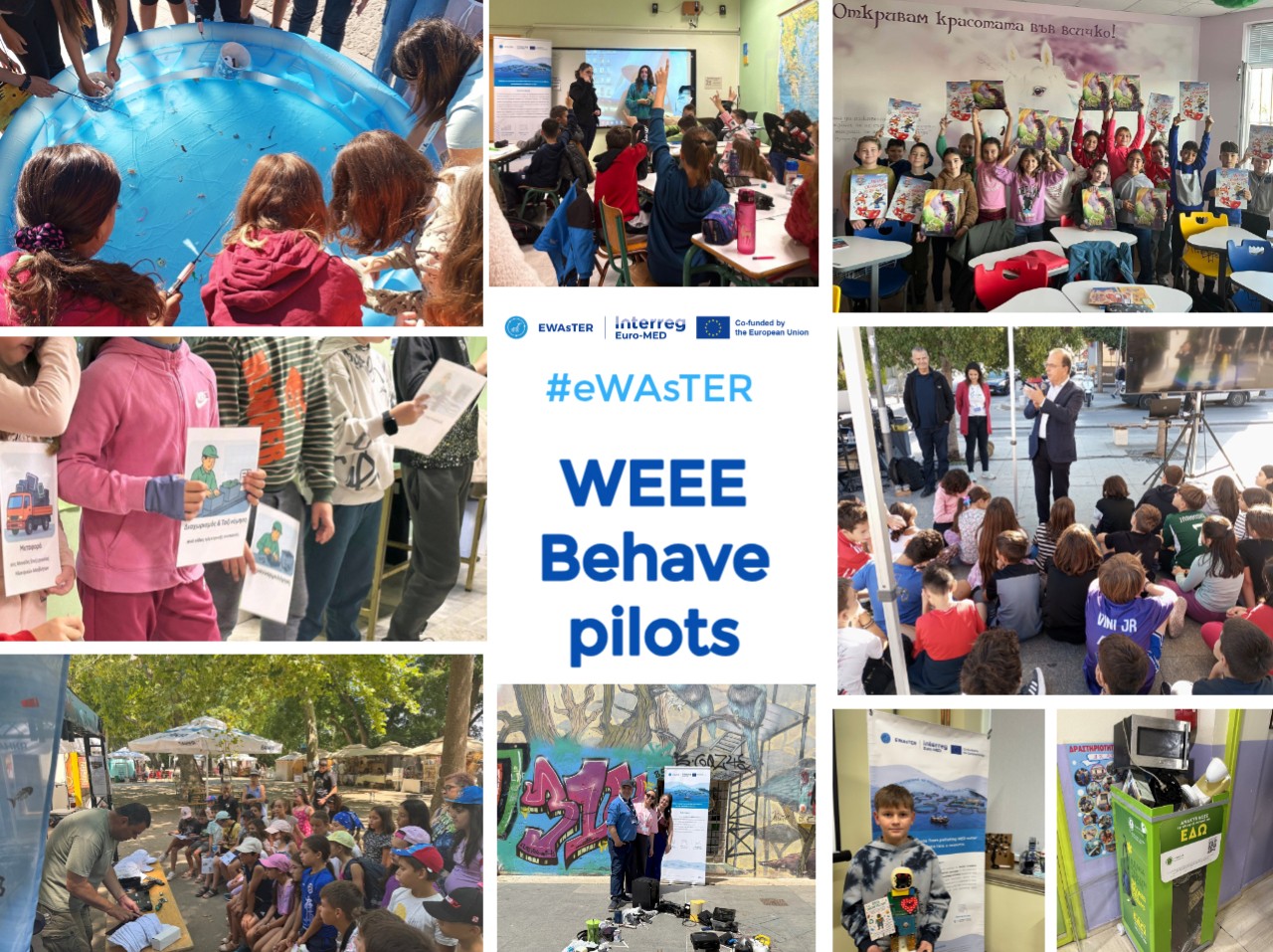

The end of March 2026 marks the official end of the project pilot testing. We are proud to announce the successful completion of the WEEE BEHAVE, a joint transnational initiative aimed at promoting responsible e-waste behavior through education and community engagement.
Implemented through the strong collaboration of project partners — Aradippou Municipality (Cyprus), Municipality of Rethymno (Greece), UBBSLA (Bulgaria), UCPB (Italy), and RSU Málaga (Spain) — the pilot has delivered remarkable and measurable impact across multiple regions.
Key Achievements of the WEEE BEHAVE Pilot:
- More than 3,000 students aged 6–12 actively participated in e-waste awareness and educational activities
- Participation from over 60 schools
- Involvement of 1,200+ family members, extending the initiative’s reach beyond classrooms
- Engagement of 190+ teachers, reinforcing the program’s educational impact
- Collection of over 3,100 kg of e-waste through dedicated campaigns and school-based competitions
WEEE BEHAVE stands as a behaviour-oriented, education-driven pilot, rooted in strong regional and institutional cooperation. By focusing on early-age learners and fostering creative participation, the initiative successfully addressed fundamental gaps in e-waste awareness while establishing a solid foundation for scalable, data-driven interventions.
Campaign Objectives:
- Raise awareness among primary school students about the environmental and societal impacts of electronic waste
- Encourage behavioural change through interactive learning, creative games, school-based competitions, and participatory workshops
- Strengthen community engagement in responsible e-waste disposal and recycling practices
- Support the development of a long-term culture of sustainability within families and local communities
The WEEE BEHAVE campaign clearly demonstrates that early education, combined with creativity and strong local partnerships, can play a pivotal role in shaping environmentally responsible behaviour. The pilot has laid the groundwork for future expansion, with significant potential to reach additional schools, broader age groups, and new communities.
Looking ahead, WEEE BEHAVE aims to further bridge the gap between awareness and action, reinforcing sustainable habits and contributing to a more circular and environmentally conscious society.
Ensuring Long-Term Impact and Transferability
WEEE BEHAVE has successfully demonstrated a sustainable and transferable model for addressing e-waste challenges through early-age education. The integration of awareness activities into school environments, supported by trained educators and local stakeholders, ensures that project results can be maintained and further developed over time.
The pilot’s replicability is supported by its modular design, clear methodology, and measurable indicators. These elements enable straightforward adaptation and implementation in other municipalities, regions, and countries. By leveraging existing institutional networks and fostering multi-stakeholder cooperation, WEEE BEHAVE creates favourable conditions for scaling up and mainstreaming its approach within broader environmental and educational policies.