
Major Advances in WEEE Compliance, Collection and Investment
Europe’s transition toward a circular economy continues to accelerate, with significant new developments in electronic waste management, recycling compliance, and circular investment policy reinforcing the urgent need for coordinated action across the sector.
Temu Partners with Electrão to Strengthen WEEE Compliance in Portugal
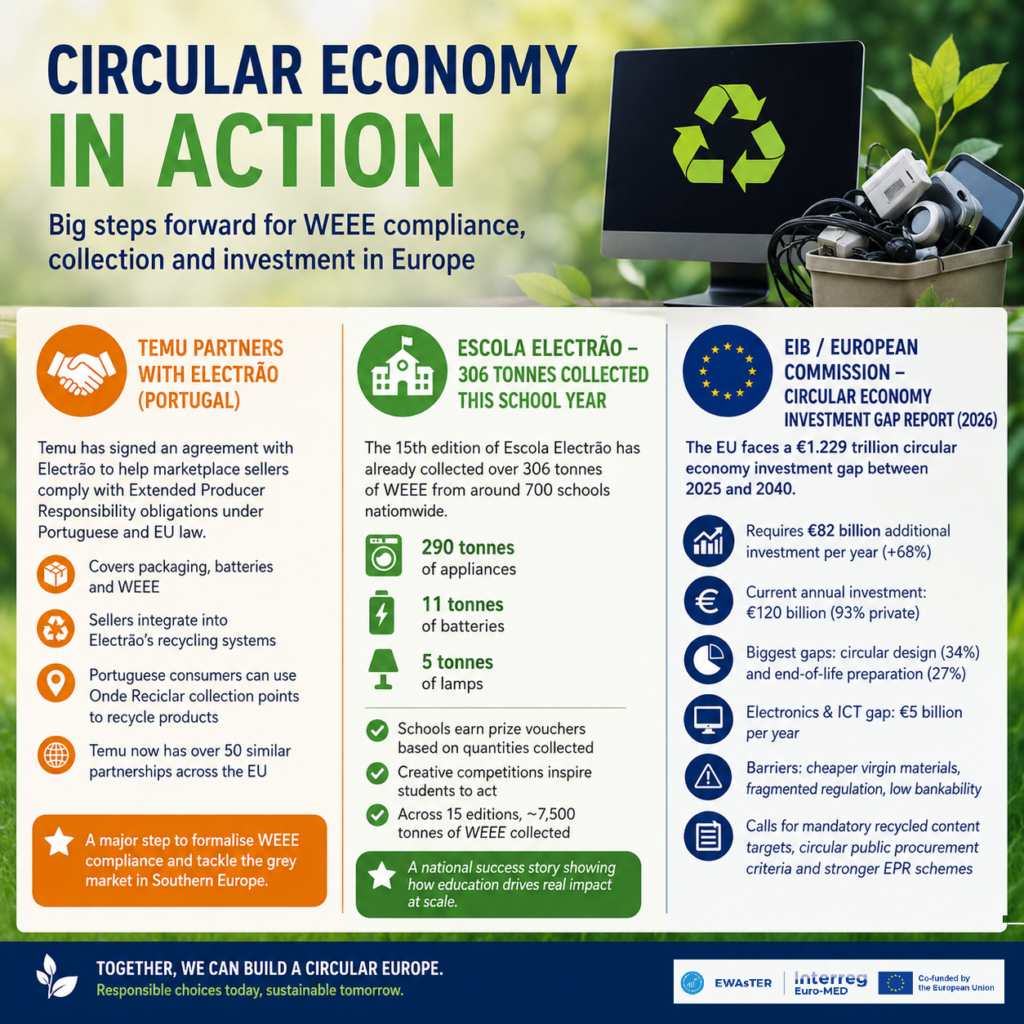
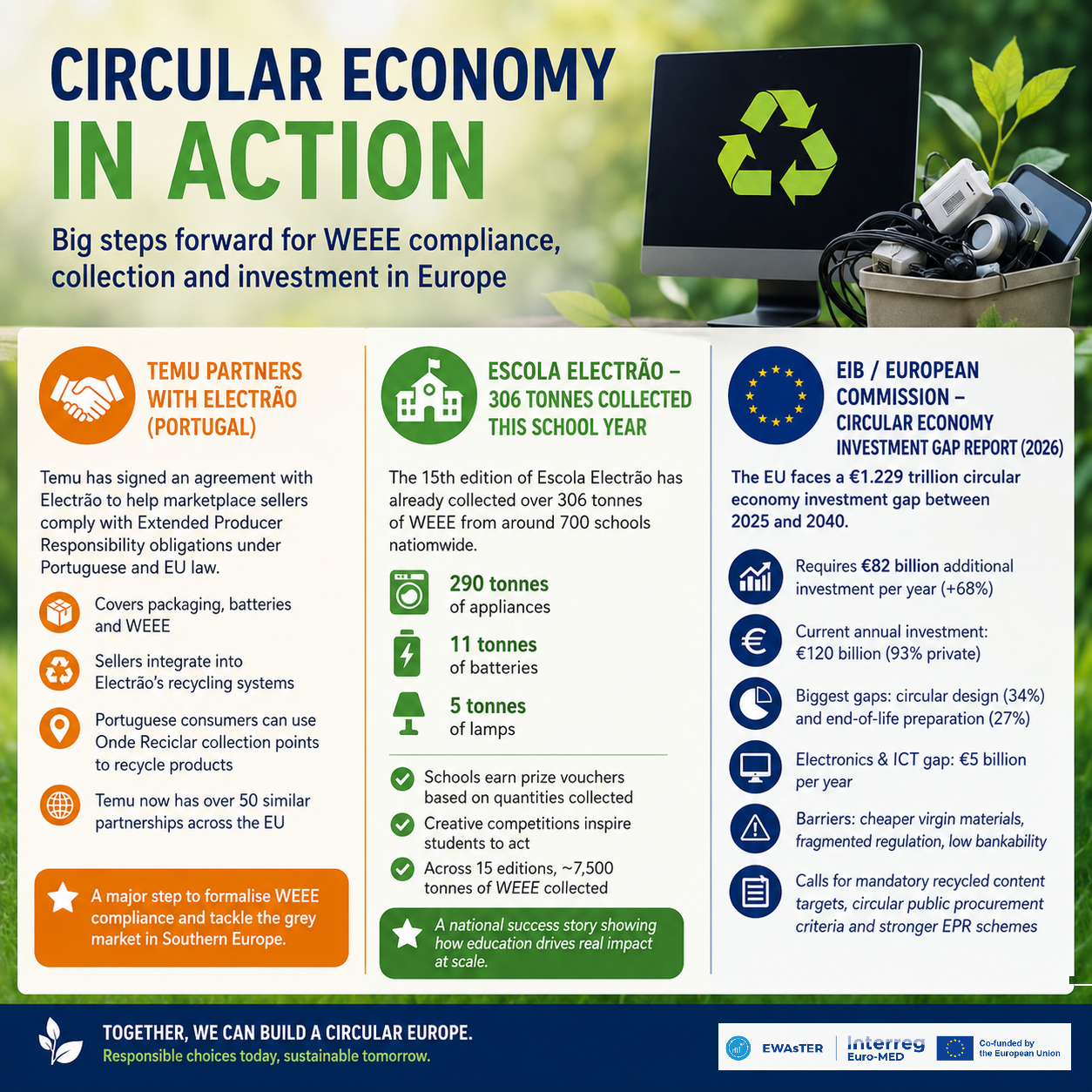
Global online marketplace Temu has signed a landmark agreement with Electrão, Portugal’s licensed waste management organisation, to support marketplace sellers in complying with Extended Producer Responsibility (EPR) obligations under Portuguese and European Union legislation.
The partnership covers packaging, batteries, and Waste Electrical and Electronic Equipment (WEEE), enabling sellers operating through the platform to integrate into Electrão’s established recycling systems. Portuguese consumers purchasing products through Temu will also be able to access Electrão’s nationwide collection network via the platform Onde Reciclar, improving access to responsible recycling solutions and encouraging more sustainable consumer behaviour. The agreement represents an important milestone for the regulation of online marketplaces in Southern Europe, directly addressing persistent challenges linked to informal WEEE handling, unregistered imports, and grey market activity. Temu has now established more than 50 similar compliance partnerships across the European Union.
This development demonstrates the growing recognition that digital marketplaces must play a direct role in supporting transparent and accountable circular economy systems.
Escola Electrão Continues to Deliver Outstanding Collection Results
At the same time, Portugal’s long-running Escola Electrão initiative continues to demonstrate how education-based collection systems can significantly increase WEEE recovery rates when implemented at national scale.
The 15th edition of the campaign has already collected more than 306 tonnes of waste during the current school year, including:
- 290 tonnes of electrical appliances
- 11 tonnes of batteries
- 5 tonnes of lamps
Nearly 700 schools across Portugal are participating in the initiative, which combines environmental education with practical collection activities and creative engagement. Schools receive prize vouchers based on the quantities collected, while students also participate in artistic competitions, waste-based installations, and environmental reporting activities. Across its 15 editions, Escola Electrão has now collected approximately 7,500 tonnes of waste, making it one of Europe’s most successful school-based circular economy initiatives.
The programme offers a strong example of how the approaches tested through the WEEE BEHAVE pilot activities can become institutionalised through long-term educational and community-based systems that sustainably improve collection rates.
New EU Report Highlights €1.229 Trillion Circular Economy Investment Gap
Further underlining the scale of Europe’s circular transition challenge, a newly released joint report by the European Investment Bank (EIB) and the European Commission estimates that the European Union faces a circular economy investment gap of €1.229 trillion between 2025 and 2040. According to the report, Europe will require an additional €82 billion in circular economy investment annually — representing a 68% increase compared to current levels. Current annual investment stands at approximately €120 billion, with private finance accounting for 93% of total funding.
The report identifies the largest investment gaps in:
- Circular product design (34%)
- End-of-life preparation and recovery systems (27%)
Electronics and ICT sectors alone face an estimated annual investment gap of €5 billion, particularly across design, manufacturing, repairability, reuse, and end-of-life management phases.
Among the main barriers identified are:
- Lower costs of virgin materials compared to recycled alternatives
- Fragmented regulatory frameworks
- Limited bankability of circular economy projects
The report calls for stronger Extended Producer Responsibility systems, mandatory recycled content targets, and enhanced circular public procurement mechanisms.
Supporting Europe’s Circular Transition Through Territorial Action
These developments reinforce the importance of territorial projects such as eWAsTER, which directly contribute to addressing Europe’s circular economy implementation gap through practical regional cooperation, pilot actions, and stakeholder engagement. The recommendations outlined in the EIB and European Commission report closely mirror the objectives pursued through the PROCURE and REUSE pilot activities, particularly in strengthening WEEE management systems, improving public procurement practices, and increasing circularity within the electronics sector. As Europe moves toward more ambitious circular economy targets, coordinated action between institutions, businesses, schools, regional authorities, and citizens will remain essential to building resilient and sustainable resource systems for the future.