Exploring Circular Economy and Innovation at Dolgi Vrh Learning Centre
Date: 11 May 2026
Participants: 13 learners from the Ptuj Adult Education Centre (Ljudska univerza Ptuj – LUP)
Organizer: Environmental Research Institute (ORZ)
Location: Dolgi Vrh Learning Centre
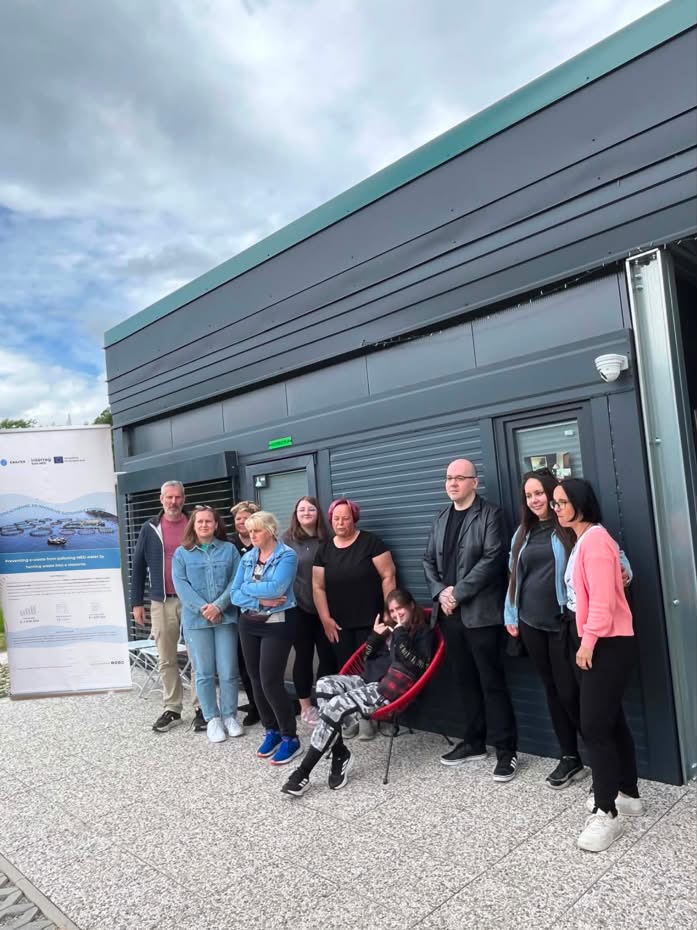
On 11 May 2026, participants from the Ptuj Adult Education Centre visited the Dolgi Vrh Learning Centre, where they were introduced to innovative approaches in sustainable construction, efficient resource use, and the circular economy. The visit focused on showcasing good practices related to reducing environmental impacts, improving energy efficiency, and extending the lifespan of materials and infrastructure, which are also among the key objectives of the eWAsTER project.
The visitors were presented with a modular construction system based on flexible space utilization and multifunctional use of facilities. This approach enables the same infrastructure to serve educational, research, demonstration, and community purposes, thereby reducing the need for new construction, lowering material consumption, and minimizing energy use associated with building and maintenance activities. Special attention was given to the concept of multidisciplinary use of space, which significantly improves the efficiency of land and infrastructure utilization while reducing the overall environmental footprint. The presentation also highlighted the use of reused materials, sustainable construction solutions, and practical measures for reducing energy consumption through thoughtful design and management of facilities. The learning centre represents a good practice example where circular economy principles are not only promoted but actively implemented in everyday operations.
From the perspective of the eWAsTER project, particular emphasis was placed on extending the lifespan of products, equipment, and materials. One of the project’s main objectives is to reduce waste electrical and electronic equipment (WEEE) through repair, reuse, refurbishment, and more efficient resource management. At Dolgi Vrh, these objectives are achieved through the use of refurbished and reused equipment, sustainable management of facilities, and continuous awareness-raising activities that encourage visitors to adopt waste prevention practices. Participants showed significant interest in the presented solutions, particularly in the integration of environmental, social, and economic dimensions of sustainable development. The visit contributed to a better understanding of how circular economy principles can be applied in practice and how innovative approaches can reduce energy consumption, preserve resources, and prevent waste generation.
The Dolgi Vrh Learning Centre therefore represents an important example of knowledge transfer and good practice in sustainable development, circular economy, and efficient resource management, serving as an inspiration for similar initiatives at both local and international levels.